


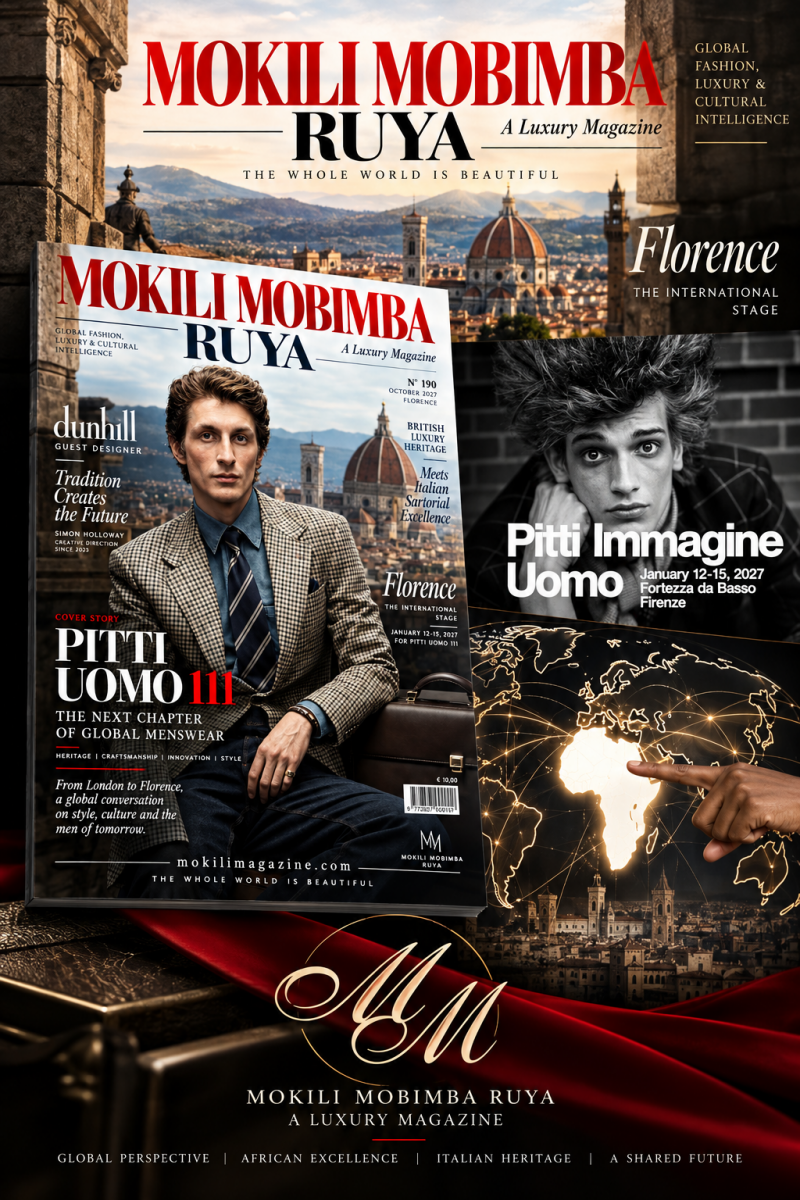
DUNHILL NAMED GUEST DESIGNER FOR PITTI UOMO 111
British Heritage, Italian Sartorial Excellence and the Future of Menswear
MOKILI MOBIMBA RUYA MAGAZINE
A Luxury Gateway Platform
By Martin Amedee Mieke
Florence, Italy | 14 October 2026
A Meeting of Two Sartorial Traditions
The appointment of Dunhill as Guest Designer for Pitti Uomo 111 places one of Britain’s most established luxury menswear houses at the centre of the international fashion conversation. Scheduled to take place in Florence from 12 to 15 January 2027, the 111th edition of Pitti Immagine Uomo will provide the setting for Dunhill to present its Fall 2027 collection on the evening of 14 January, marking the house’s first presentation in the Tuscan capital.
The announcement represents more than a prestigious appearance on the menswear calendar. It brings together two complementary traditions: the discipline and heritage of British tailoring and the artistic sensibility, craftsmanship and cultural sophistication associated with Florence.
For Dunhill, the occasion offers an opportunity to interpret its identity within a city whose relationship with fashion has long been shaped by international exchange. For Pitti Uomo, it reinforces Florence’s position as a meeting point for designers, manufacturers, buyers, journalists and the wider global menswear industry.
Pitti Uomo: A Platform for International Fashion
Over several decades, Pitti Uomo has established itself as an influential platform for contemporary menswear, combining commercial discovery with cultural programming and significant designer presentations.
The appointment of Dunhill continues a tradition of inviting established houses and distinctive creative voices to Florence. Giorgio Armani’s appearance in 1979 remains an important reference point in the history of Italian menswear, while more recent editions have welcomed designers including Raf Simons, Martine Rose, Grace Wales Bonner and Paul Smith.
Pitti Uomo 110 also expanded the Guest Designer format to include four designers, demonstrating the fair’s capacity to accommodate different creative perspectives within a single international platform.
Against this background, Dunhill’s participation signals the continuing relevance of heritage brands capable of connecting historical identity with contemporary design.
Dunhill: An Enduring Language of British Luxury
Founded in 1893 by Alfred Dunhill, the British house developed its identity around the modern gentleman’s wardrobe, combining functionality, material quality and a distinctive understanding of personal style. Today, as part of the Richemont luxury group, Dunhill continues to build on this foundation through tailoring, outerwear, leather goods, accessories and sportswear.
Tailoring remains central to the house’s identity. The suit and blazer are not simply wardrobe essentials; they represent a broader philosophy of dressing in which precision, proportion and the quality of materials communicate individuality without excess.
Dunhill’s presence in contemporary public life, including its visibility on the red carpet, further illustrates how traditional menswear codes continue to evolve across different generations and cultural settings.
The challenge facing an established luxury house is not merely to preserve its heritage, but to make that heritage meaningful to a changing international audience.
Simon Holloway and the Art of Contemporary Classicism
Since taking the creative director role in 2023, Simon Holloway has been responsible for advancing Dunhill’s design language while maintaining its connection to British sartorial tradition.
His previous experience includes the creative directorship of Agnona and senior creative positions at Hogan. At Dunhill, his work draws on an understanding of textiles, leather, ready-to-wear, footwear and accessories, alongside relationships with British and Italian mills.
This combination of expertise is particularly relevant to the Florence presentation. The collection is expected to explore the relationship between the structural discipline of English dressing and the expressive possibilities of Italian craftsmanship.
Holloway has described the invitation as a great honour, recognising Pitti Uomo’s distinctive place in menswear. He has also emphasised the significance of bringing Dunhill’s “cutting-edge classicism” to Florence.
The expression captures a central question in contemporary luxury: how can a house remain faithful to its origins while continuing to challenge established conventions?
The Anglo-Florentine Connection
At the heart of Dunhill’s presentation lies a historical relationship between Britain and Florence.
From the nineteenth century onwards, English expatriates settled in the Tuscan city, contributing to a cultural exchange that extended beyond architecture, literature and the arts to include clothing, domestic life and social customs.
This Anglo-Florentine heritage provides the conceptual foundation for Dunhill’s salon-style presentation. Rather than treating British tailoring and Italian craftsmanship as separate traditions, the collection is intended to explore their points of contact.
Florence offers a particularly compelling environment for this dialogue. Its history of artisanal production, its relationship with luxury manufacturing and its international cultural identity create a setting in which traditional techniques can be reconsidered through a contemporary lens.
For Dunhill, the city becomes more than a backdrop. It becomes part of the collection’s narrative.
WILD: Tradition Without Convention
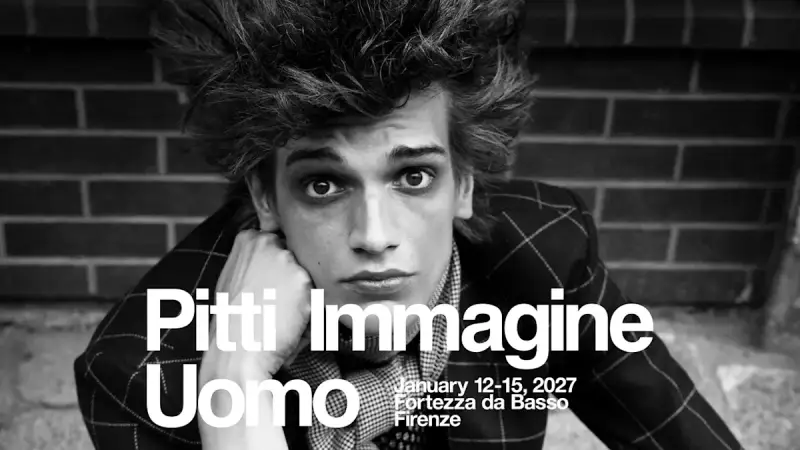
The wider creative atmosphere of Pitti Uomo 111 is expressed through the theme WILD, which challenges established expectations and encourages a more unconventional interpretation of contemporary style.
The fair’s campaign reportedly places a sharply tailored suit alongside a punk-inspired attitude, creating a visual tension between formal elegance and individual rebellion.
Within this context, Dunhill’s participation introduces an interesting dialogue. Tailoring is traditionally associated with structure, precision and established codes of dress. Yet its continued relevance depends on the capacity to reinterpret those codes for people whose ideas of elegance are increasingly personal.
The contemporary luxury consumer does not necessarily reject tradition. Instead, tradition is increasingly expected to demonstrate flexibility, authenticity and relevance.
For heritage houses, the opportunity lies in transforming established codes into expressions of modern identity.
A Strategic Signal for the Menswear Market
Dunhill’s selection also carries significance for the commercial side of the international fashion industry.
For retailers and buyers, Pitti Uomo remains a place to assess collections, discover products and interpret changes in consumer demand. The decision to give a heritage tailoring house a prominent place within the programme draws attention to the continuing role of refined menswear in the contemporary wardrobe.
Suits and sport coats are increasingly worn according to individual preferences rather than rigid dress codes. This creates opportunities for brands that can combine technical expertise and product quality with versatility, comfort and a distinctive point of view.
Ivano Cauli, CEO of Pitti Immagine, has described the presence of a house that draws on British sartorial tradition while reinterpreting it for contemporary audiences as a reaffirmation of Pitti Uomo’s international importance.
Francesca Tacconi, the fair’s special events manager, has similarly characterised Dunhill as a house rooted in tradition yet willing to challenge its rules.
Together, these perspectives reflect the wider ambition of Pitti Uomo: to bring established names into conversation with the cultural and commercial forces reshaping menswear.
Beyond the Runway: The Future of Luxury
Dunhill’s arrival in Florence provides a useful perspective on the evolving relationship between heritage, creativity and international luxury.
A brand’s history remains a valuable asset, but history alone cannot guarantee relevance. Contemporary luxury requires a continuing dialogue between craftsmanship, design, cultural context and the expectations of new audiences.
The British–Italian relationship offers a particularly strong framework for this discussion. British tailoring contributes a language of structure and restraint; Italian craftsmanship introduces its own traditions of material expertise, artistic interpretation and attention to detail.
Their meeting demonstrates how luxury can evolve through cultural exchange rather than through the abandonment of established identities.
For MOKILI MOBIMBA RUYA MAGAZINE, this is the larger story behind Dunhill’s appointment: not simply the presentation of a new collection, but the way international fashion platforms create value by connecting heritage houses, creative talent, manufacturing expertise and global markets.
As Pitti Uomo prepares for its January 2027 edition, Florence will once again become a stage on which the past and future of menswear meet.
And for Dunhill, the occasion offers an opportunity to demonstrate that British elegance, when placed in dialogue with Italian artistry, can continue to speak to a changing world.
MOKILI MOBIMBA RUYA MAGAZINE
Global Fashion, Luxury & Cultural Intelligence
A LUXURY GATEWAY PLATFORM
Where Cultures Meet, Stories Travel.
#MokiliMobimbaMagazine #PittiUomo #PittiUomo111 #GoWild #PittiGoesWild #PittiImmagine #Menswear #LuxuryMenswear #LuxuryFashion #MensFashion #FashionEditorial #FashionCampaign #ContemporaryMasculinity #RefinedPunk #BritishTailoring #SartorialElegance #Dunhill #FashionCulture #CreativeDirection #FashionPhotography #GlobalFashion #LuxuryLifestyle #StyleWithoutBoundaries #ArtDeVivre #FutureOfFashion



Add comment
Comments